About a week ago the twitter account Svensk Historia tweeted about the Nordic king Erik of Pomerania. I retweeted it saying it always makes me think about the Swedish children's show Salve from 1997. This was read by a host at the Swedish radio music show Klassisk morgon and we started talking about the show and its music. Later that day I was contacted by the producer and they wanted me on the show, so this morning I made my radio debute. It can be heard here but since it is in Swedish and since I have much more to say than I had time for on the show, I thought I would make a blog post about it as well. One of the characters, Katarina Örnfot, has her own post in my My Heroine series. It can be found here and I will try not to repeat myself too much.
I was 12 years old when Salve was first broadcasted and already a history nerd with a massive interest in knights. So this was really the perfect show for me and I started recording it on tape every morning already from the start. A year later, the show was cut down to an eleven episode long TV series which was then made into two VCRs and later on also to a DVD. (And of course I have both and yes, I do still watch the DVD from time to time.)
The plot revolves around Nils Svensson who normally is from 1997. He travels to the Swedish town Kalmar to celebrate the 600 jubliee of the union between all the Nordic countries set up by Danish queen Margaret that normally goes by the name The Kalmar Unionen. He tries to call his mother with his mobile phone, but the display just says 1397. He tries it anyway and gets transported to Kalmar 1397. There he befriends Katarina who is the daughter of a knight and works in the bathing house helping the elderly women Rodwy. Later on he becomes a squire to the rather clumsy knight Rosenstråle. The new 15 year old king, Erik (of Pomerania) is bored in the castle and runs away, out into town and becomes a friend of Nils and Katarina as well. At the end he is officially crowned king.
I cannot over-estimate how much this show has meant to me! It really is historical fiction at its best. It has an overarching frame that is the happenings in Kalmar in 1397 and there also seems to be a structure of what and how they wanted to convey facts. This makes the show take the facts seriously, but is not too serious in how they teach the children making it fun to learn. They had question times where children wrote in questions about the Middle Ages to the show, but most of it was told through the fictive plot. The fact was more showed (or played) into the viewers than taught into them.
Nils is the character through whom the viewers learn and just like me during the time I watched Salve, goes from a rather stereotypical image about knights, to learning a great deal about the period itself. What I find to be one of the best aspects about his character is the fact that he is never seen as stupid like is so often the case with characters the viewers are supposed to learn through in TV shows in general and children's shows in particular. Nils just does not know so much about the Middle Ages when he gets to 1397 because he is from 1997 (The scene before he time travels in the beginning of the first episode also has him imagining a rather stereotypical picture about how he, as a knight, saves a princess from a dragon.).
I have already talked about Katarina, but I cannot stress enough how great she is as a female character. She is not reduced to a steretypical medieval woman or a tomboy who gets to play knight. Neither is she overshadowed by the boys. She is independent, complex and colourful and certainly no damsel in distress.
Based on how popular the show was, I was sad to not see it getting more of a follow up than a shortened version in the autumn the year after. I think it would have been so perfect to make a winter holiday show (or a julkalender) so we could see how the people during the Middle Ages celebrated christmas and handled the colder climate of the season.
I rewatch the show from time to time and even though it is a bit childish from time to time and there are some plotholes, I can overlook its flaws because it is aimed at children and it shows how much fun you can have with real facts. It does still hold up extremely well, 20 years and a master's degree in archaeology later. It had me interested in the Middle Ages as a time period and I am still building on that knowledge in my work as an archaeologist today.
To move forward, one needs to look backwards. That is why i dig downwards.
Visar inlägg med etikett History. Visa alla inlägg
tisdag 9 maj 2017
Salve. En medeltidssaga
Etiketter:
1397,
14th century,
1997,
Archaeology,
History,
Kalmar union,
Middle Ages,
Salve,
SWE
onsdag 5 april 2017
Andreas Bruce
From time to time as you study history, you stumble upon pretty cool people and Andreas Bruce is definitely one of them.
I watched an episode of a Swedish TV show called Nationen (the Nation) recently. The series is all about telling Swedish history from new perspectives. It uses different hosts for every episode to tell stories about issues which concern them. I do not intend to discuss the show or the episode in itself, but Andreas's tale is just so amazing that it needs to be told. There is a book about him and I intend to read it, but have not been able to do so. Therefore this entry is based on facts from the TV show, Wikipedia and from interviews from Sveriges radio P4 Gotland.
28th December 1808 the noble valet de chambre Adam Bruce and his wife Fredrica Charlotta Wijnblad had a child who was named Christina Therese Isabelle Jeanette Louise Bruce. However, little Therese grew up envying her brothers feeling like one of them (among other things she wants to wear trousers) and she was called "Lilla fröken herrn" (Little Miss Mister) by the family.
At first the family does not seem to found of the idea of treating Therese as a boy (especially not her father) and at the age of 16, she runs away from home dressed as a man. The family was devastated and thought Therese had killed herself, but one of her brothers found her after a couple of days to everyone's great relief.
After this, Adam Bruce took his daughter to doctor Hagströmer who classified Therese as a hermaphrodite and from this day she came to live the rest of her life as a man. The family, even the father, also seems to have accepted the fact that they now had another son and Adam gives him the family name Andreas and Therese renames herself as Ferdinand Andreas Edvard. As the sex resassignment became known it however caused a scandal and a conflict with the family as a result of it. Because of this, Andreas moved to Gotland to live a more secret life in 1829.
On Gotland, he got a position at the ship builder and merchant Jacob Dubbe at Rosendal in Follingbo. There he seems to have lived quite a normal life with Jacob being the only person to know that he is what we today would call a transsexual. However he encountered an inspector named Lars Nyström who got to know about his secret. What happens next is hard to know and Andreas is quite vague on the subject in the autobiography he wrote during the 1870's. The result of his encounter with Lars Nyström was quite evident though. Andreas became pregnant and considered suicide.
In July 1838 the daughter Carolina was born and was first left to a foster family, but Andreas quit his job and moved, together with his lover Maria Lindblad and her daughter to Öja. The church refused to marry them and when it was revealed that he was Carolina's biological mother, he was also expelled fom church for ten years. He died in 1885.
I find Andreas's story very interesting and it is amazing that he could live his life as a man and at least at times was accepted for the one he was. His story can also work as a witness for showing that transsexuality is not a "modern trend". Transexuals (just like other types of LGBTQ+) have always been there and it is about thime that we acknowlegde this.
Andreas's autobiography was published with the title Therese Andreas Bruce - en sällsam historia från 1800-talet by Inger Littberger Caissou-Rousseau in 2013 and the play Jag vet vem jag är which was played on the regional theatre on Gotland last year, directed by Swedish comedian Babben Larsson is based on his life as is the play I am not a girl played in Umeå in 2014.
Photo of Andreas was borrowed hereand of the book here.
I watched an episode of a Swedish TV show called Nationen (the Nation) recently. The series is all about telling Swedish history from new perspectives. It uses different hosts for every episode to tell stories about issues which concern them. I do not intend to discuss the show or the episode in itself, but Andreas's tale is just so amazing that it needs to be told. There is a book about him and I intend to read it, but have not been able to do so. Therefore this entry is based on facts from the TV show, Wikipedia and from interviews from Sveriges radio P4 Gotland.
28th December 1808 the noble valet de chambre Adam Bruce and his wife Fredrica Charlotta Wijnblad had a child who was named Christina Therese Isabelle Jeanette Louise Bruce. However, little Therese grew up envying her brothers feeling like one of them (among other things she wants to wear trousers) and she was called "Lilla fröken herrn" (Little Miss Mister) by the family.
At first the family does not seem to found of the idea of treating Therese as a boy (especially not her father) and at the age of 16, she runs away from home dressed as a man. The family was devastated and thought Therese had killed herself, but one of her brothers found her after a couple of days to everyone's great relief.
After this, Adam Bruce took his daughter to doctor Hagströmer who classified Therese as a hermaphrodite and from this day she came to live the rest of her life as a man. The family, even the father, also seems to have accepted the fact that they now had another son and Adam gives him the family name Andreas and Therese renames herself as Ferdinand Andreas Edvard. As the sex resassignment became known it however caused a scandal and a conflict with the family as a result of it. Because of this, Andreas moved to Gotland to live a more secret life in 1829.
On Gotland, he got a position at the ship builder and merchant Jacob Dubbe at Rosendal in Follingbo. There he seems to have lived quite a normal life with Jacob being the only person to know that he is what we today would call a transsexual. However he encountered an inspector named Lars Nyström who got to know about his secret. What happens next is hard to know and Andreas is quite vague on the subject in the autobiography he wrote during the 1870's. The result of his encounter with Lars Nyström was quite evident though. Andreas became pregnant and considered suicide.
In July 1838 the daughter Carolina was born and was first left to a foster family, but Andreas quit his job and moved, together with his lover Maria Lindblad and her daughter to Öja. The church refused to marry them and when it was revealed that he was Carolina's biological mother, he was also expelled fom church for ten years. He died in 1885.
I find Andreas's story very interesting and it is amazing that he could live his life as a man and at least at times was accepted for the one he was. His story can also work as a witness for showing that transsexuality is not a "modern trend". Transexuals (just like other types of LGBTQ+) have always been there and it is about thime that we acknowlegde this.
Andreas's autobiography was published with the title Therese Andreas Bruce - en sällsam historia från 1800-talet by Inger Littberger Caissou-Rousseau in 2013 and the play Jag vet vem jag är which was played on the regional theatre on Gotland last year, directed by Swedish comedian Babben Larsson is based on his life as is the play I am not a girl played in Umeå in 2014.
Photo of Andreas was borrowed hereand of the book here.
torsdag 23 mars 2017
Tutankhamun. The tomb and the Treasure
Carnarvon: "Can you see anything?"On Tuesday, I visited the travelling exhibition about the Egyptian pharaoh Tutankhamun in Stockholm. It was all made up of replicas and as someone working in the heritage sector, I think it is a great idea. Not everyone has the money to travel to Egypt, but is still in love with its history and the amazing artefacts I think we can safely say that everyone has seen at least once in a book or on TV.
Carter: "Yes, wonderful things!"
I really enjoyed the exhibition. They really had tried to put all the artefacts into a context, which was a pleasant surprise. I thought it was going to be, like it often is with travelling exhibitions like this. Especially when it comes to really famous objects. But it is important for the understanding of the objects to have a context to place them in.
The objects are of course amazing in themselves, but there is much to be learned from them as well. Ancient Egypt is really a very different culture (even from today's Egypt) and to create an understanding of it, we much put all those treasures into a context to really understand it.
Even though I have had an interest in Ancient Egypt for years (I have also studied Egyptology at the university for a year.), I still think I have lots to learn. This also became pretty obvious at the exhibition. For the first time, I really understood what a so called corn Osiris looked like. (See picture bellow.)
![]() |
| Corn Osiris |
I missed a mummy, even though I totally understand why it was not possible to have one. The had a wall explaining research that has been done on the mummy and different theories of how he might have died. Underneath had they placed a table with a picture of the mummy. This was actually quite a good way to sudstitute, even though I do prefer real mummies. (Yes, I am somewhat obsessed with death and burials!)
While you walked around among the artefacts after this view of the tomb itself you could choose if you wanted to listen to more or just walk around and I was really amazed by it all. It had me thinking a lot. For example how the outer chapel of the coffins were built. The replica was placed on a podium the size of the burial chamber and the builders can not have had much space to move around as they built it for sure. And how do you actually move coffins of solid gold that weigh over 1 000 kilos?! Because I refuse to say aliens, I am going for a lot of block and tackles and hard working workers (No, Ancient Egypt did not keep slaves! In fact the first known strike in history is of Egyptian tomb workers who fought for higher salary.).
To sum it all up: I loved the exhibition. More should be made like this.
Etiketter:
Ancient Egypt,
Archaeology,
Exhibitions,
History,
Howard Carter (1874-1939),
Tutankhamun
lördag 11 mars 2017
Dead People's Society - "Helge"
![]() |
| The stern of Vasa |
On board and around Vasa were the remains of at least 16 individuals found and I thought I should talk about one of those. Since we do not know any names of the individuals found on Vasa, they have got name based on the Swedish spelling alphabet (with the exception of the two women Beata and Ylva). This particular man has been called Helge, so that is what I will call him in this entry.
Helge's skeleton is very fragmentary, around 2 770 fragments were found together on the port side of lower gun deck. This is quite a lot considering a "normal" body of an adult human being contains 206 bones. A lot of the fragments (c. 2 100) are however too small to estimate which particular bone they have been a part of, but 671 of them could be pieced together.
![]() |
| Vasa |
Together with the skeletons given the names Filip and Gustav, Helge has the most complete skeleton out of all the Vasa skeletons. He however, misses parts of his hands and feet and the skull was broken into pieces. His sex is estimated as "typical male" based on features from remaining skull fragments and his age 33+3 years based on age markers on the femur, humerus and skull seams. Chemical analysis show that he ate a lot of meat.
Besides the bones, the archaeologists also found preserved hair, nails and brain tissue.
Sources
During, Ebba 1994. De dog på Vasa. Skelettfynden och vad de berättar, Vasastudier 16
onsdag 8 mars 2017
Historical Women - Princess Cecilia Vasa of Sweden
Today is the international women's day and in what better way can I acknowledge this than by writing an entry about my favourite historical woman: Cecilia Vasa.
She was born as a Swedish princess, the daughter of Swedish king Gustav Eriksson (Vasa) (Traditionally called Gustav Vasa) and his second wife Margareta Eriksdotter (Leijonhufvud) on 6th November 1540. She had two elder brothers, Erik (who was the son of Gustav and his first wife, Katarina av Sachsen-Lauenburg) and Johan and an older sister named Katarina. She was given the name Cecilia after her paternal grandmother Cecilia Månsdotter (Eka). After Cecilia was born, the family expanded with the daughters Anna, Sofia and Elisabet and the sons Magnus and Karl. Two of her brothers (Sten and Karl) also died within a year after their birth. She is also great niece pf Kristina Nilsdotter Gyllenstierna who was the first Historical Woman I wrote about on this blog.
Swedish history books tend to focus on the fact that Gustav Vasa had three sons (Magnus died early) who would win the Swedish throne. The five daughters are in general overlooked. If they are mentioned at all, their roles have been downplayed. Cecilia is the most famous among the daughters, not least because of the so called Vadstenabullret (the Vadstena noice), but more about that later.
Like her brothers, Cecilia and her sisters actually got a pretty good education. Because Sweden was so heavily influenced by Germany at the time, the royal children probably was taught German. When she got older, probably as a result of her oldest brother Erik's wish to marry queen Elizabeth I of England, Cecilia also learnt English.
On contrary to, for example the Tudors in England, Gustav Vasa seems to have kept his family close. They moved around between different castles, but most of the time, they did it together. Considering the fact that he seems to have been a harsh, cold-hearted tyrant towards his subjects, it is interesting (I will not go so far to say sweet.) to see how much he seems to have been worried when any of the children were sick. For example when he and queen Margareta were in Norrköping without the children and Erik sent him a letter saying Cecilia had got sick. When Margareta died 26th August 1551, Cecilia was just about to turn 11. At first their ageing great aunt Kristina Gyllenstierna was the one to take care of the royal children, but they soon proved to be too much for her, so the responsibility went to the childrens's aunts Brita and Märta instead. About a year later, their father remarried Brita's daughter Katarina Gustavsdotter (Stenbock) who was only 16 years old at the time (i.e. younger than her oldest stepson). Gustav was 55.
After a lot of delays, Cecilia's older sister Katarina married Count Edzard II of East Frisia in early December 1559. (Edzards mother Anna, just like queen Margareta and Katarina Stenbock, is a very interesting lady who I will probably have reason to make an entry for in the future.) When he travelled to Sweden for the wedding, his younger brother Johan came along. Gustav let Cecilia follow her sister on her way to East Frisia, but not for too long. He also wrote a letter to her when the wedding party had reached Vadstena castle a little before christmas reminding her that she must return to Stockholm. Cecilia ignored the letter completely, forcing Gustav to contact his cousin (son of Kristina Gyllenstierna and uncle to Gustav's children) Svante Sture encouraging him to make Cecilia return. The letter arrived too late however.
Following her sister, Cecilia seems to have been attracted to Edzard's brother Johan. The guards at Vadstena castle soon saw the man sneeking in to her bedroom through the window at night. They allerted Erik who seems to have caught Johan with his trousers down in his sister's bedroom. This episode and what followed is what has been called Vadstenabullret. Of course this turned into a huge scandal and it did not exactly help that Erik handled it in an extremely public way. Gustav was furious not only with Cecilia, but with Erik as well. He sent off his servants to the castle in Västerås to do an inventory of Cecilia's belongings so he could take them away from her. Katarina, however, stepped up for her sister, preventing the servants to take anything away. She and her husband were placed in house arrest in Västerås and where not allowed to travel to East Frisia until 1561, one year after Gustav had died.
Erik became king Erik XIV after their father's death in 1560. He started created instructions for how the royal women should behave, probably as a result of Vadstenabullret. He was especially hard on Cecilia, but she would have none of it and, to put it bluntly, told him multiple times to fuck off.
Even though her brother's wish to marry the English queen was never fulfilled, Cecilia seems to have become good friends with Elizabeth I. In a letter dated January 1563, she is happy that an engagement to a Polish count has been broken due to her brother Johan's marriage to the Polish princess Katarina Jagellonica. Cecilia seems to have been more interested in getting herself an English husband and the Earl of Arundel seems to have gained an interest in the Swedish princess. Erik, however, still wanted her to marry the Polish count. Elizabeth did not give Erik an answer to his proposal, but she did write multiple letters to the Swedish king, asking him to let Cecilia come visit her in England. Cecilia was finally married to Christoph II, margrave of Baden-Rodemachern in 1564 and they got six sons. Cecilia also gave birth to a daughter after she had become a widow in 1575.
The information surrounding Cecilia's marriage is contradictive, but interesting. How come she settled for such a lowly husband? The marriage deal also seems to have been made in haste and a lot of revision were made over the course of the engagement. The Nordic 7 years war was raging the country and because of this Cecilia's dowry would be paid in three partial sums, giving Erik a hold on his sister who he believed to have taken Johan's side in the conflict the brothers had.
After her wedding, she visited Katarina in East Frisia and while there she was invited to Elizabeth I and went to England in september 1565. Many people in the court were curious about the Swedish princess who they had heard so much about already. While in England, she gave birth to her first son, who she called Edvard Fortunatus and Elizabeth became the boy's godmother.
Besides having wanted to make the trip for quite some time, Cecilia was in England to renew the negotiation of a marriage between her brother and Elizabeth, but also there to collect a crew which could fight enemy ships in the Baltic Sea. While in England, Cecilia spent a lot more money on partying than what she earned and it did not take long for the English court to take offence against her.
After her visit to England, Cecilia and her husband's economy was in a terrible state and they went home to Baden-Rodemachern. After Erik was removed from the throne and Johan became king, the couple travelled to Sweden where Cecilia was given forest fiefs in Skinnskatteberg, Fellingsbro and Arboga gaining her the title "Countess of Arboga". She also got a kungsgård (royal farm) and iron fiefs in Lindesberg, Noraskog and Guldsmedshyttan. Other incomst sources were piracy in the Baltic Sea and a brothel in Brussels.
There is a lot more that Cecilia did, but this became a rather long post, so I think I need to end it here. When Cecilia died 27th January 1627 as the last surviving of Gustav Vasa's children, a new little princess had been born into the Vasa family just over a month earlier. Her name was Christina and she would grow up to be queen of Sweden and just as free spirited as her great aunt.
Sources:
Harrison, Dick & Eriksson, Bo 2012. Norstedts Sveriges historia 1350-1600.
Larsson, Lars-Olof 2002. Gustav Vasa - Landsfader eller tyrann?
Larsson, Lars-Olof 2005. Arvet efter Gustav Vasa. En berättelse om fyra kungar och ett rike
Tegenborg-Falkdalen, Karin 2010. Vasadöttrarna
Tegenborg-Falkdalen, Karin 2015. Vasadrottningen. En biografi över Katarina Stenbock 1535-1621
Pictures of what is believed to be Cecilia was borrowed here.
She was born as a Swedish princess, the daughter of Swedish king Gustav Eriksson (Vasa) (Traditionally called Gustav Vasa) and his second wife Margareta Eriksdotter (Leijonhufvud) on 6th November 1540. She had two elder brothers, Erik (who was the son of Gustav and his first wife, Katarina av Sachsen-Lauenburg) and Johan and an older sister named Katarina. She was given the name Cecilia after her paternal grandmother Cecilia Månsdotter (Eka). After Cecilia was born, the family expanded with the daughters Anna, Sofia and Elisabet and the sons Magnus and Karl. Two of her brothers (Sten and Karl) also died within a year after their birth. She is also great niece pf Kristina Nilsdotter Gyllenstierna who was the first Historical Woman I wrote about on this blog.
Swedish history books tend to focus on the fact that Gustav Vasa had three sons (Magnus died early) who would win the Swedish throne. The five daughters are in general overlooked. If they are mentioned at all, their roles have been downplayed. Cecilia is the most famous among the daughters, not least because of the so called Vadstenabullret (the Vadstena noice), but more about that later.
Like her brothers, Cecilia and her sisters actually got a pretty good education. Because Sweden was so heavily influenced by Germany at the time, the royal children probably was taught German. When she got older, probably as a result of her oldest brother Erik's wish to marry queen Elizabeth I of England, Cecilia also learnt English.
![]() |
| Cecilia on a contemporary medal |
After a lot of delays, Cecilia's older sister Katarina married Count Edzard II of East Frisia in early December 1559. (Edzards mother Anna, just like queen Margareta and Katarina Stenbock, is a very interesting lady who I will probably have reason to make an entry for in the future.) When he travelled to Sweden for the wedding, his younger brother Johan came along. Gustav let Cecilia follow her sister on her way to East Frisia, but not for too long. He also wrote a letter to her when the wedding party had reached Vadstena castle a little before christmas reminding her that she must return to Stockholm. Cecilia ignored the letter completely, forcing Gustav to contact his cousin (son of Kristina Gyllenstierna and uncle to Gustav's children) Svante Sture encouraging him to make Cecilia return. The letter arrived too late however.
Following her sister, Cecilia seems to have been attracted to Edzard's brother Johan. The guards at Vadstena castle soon saw the man sneeking in to her bedroom through the window at night. They allerted Erik who seems to have caught Johan with his trousers down in his sister's bedroom. This episode and what followed is what has been called Vadstenabullret. Of course this turned into a huge scandal and it did not exactly help that Erik handled it in an extremely public way. Gustav was furious not only with Cecilia, but with Erik as well. He sent off his servants to the castle in Västerås to do an inventory of Cecilia's belongings so he could take them away from her. Katarina, however, stepped up for her sister, preventing the servants to take anything away. She and her husband were placed in house arrest in Västerås and where not allowed to travel to East Frisia until 1561, one year after Gustav had died.
Erik became king Erik XIV after their father's death in 1560. He started created instructions for how the royal women should behave, probably as a result of Vadstenabullret. He was especially hard on Cecilia, but she would have none of it and, to put it bluntly, told him multiple times to fuck off.
Even though her brother's wish to marry the English queen was never fulfilled, Cecilia seems to have become good friends with Elizabeth I. In a letter dated January 1563, she is happy that an engagement to a Polish count has been broken due to her brother Johan's marriage to the Polish princess Katarina Jagellonica. Cecilia seems to have been more interested in getting herself an English husband and the Earl of Arundel seems to have gained an interest in the Swedish princess. Erik, however, still wanted her to marry the Polish count. Elizabeth did not give Erik an answer to his proposal, but she did write multiple letters to the Swedish king, asking him to let Cecilia come visit her in England. Cecilia was finally married to Christoph II, margrave of Baden-Rodemachern in 1564 and they got six sons. Cecilia also gave birth to a daughter after she had become a widow in 1575.
The information surrounding Cecilia's marriage is contradictive, but interesting. How come she settled for such a lowly husband? The marriage deal also seems to have been made in haste and a lot of revision were made over the course of the engagement. The Nordic 7 years war was raging the country and because of this Cecilia's dowry would be paid in three partial sums, giving Erik a hold on his sister who he believed to have taken Johan's side in the conflict the brothers had.
After her wedding, she visited Katarina in East Frisia and while there she was invited to Elizabeth I and went to England in september 1565. Many people in the court were curious about the Swedish princess who they had heard so much about already. While in England, she gave birth to her first son, who she called Edvard Fortunatus and Elizabeth became the boy's godmother.
Besides having wanted to make the trip for quite some time, Cecilia was in England to renew the negotiation of a marriage between her brother and Elizabeth, but also there to collect a crew which could fight enemy ships in the Baltic Sea. While in England, Cecilia spent a lot more money on partying than what she earned and it did not take long for the English court to take offence against her.
After her visit to England, Cecilia and her husband's economy was in a terrible state and they went home to Baden-Rodemachern. After Erik was removed from the throne and Johan became king, the couple travelled to Sweden where Cecilia was given forest fiefs in Skinnskatteberg, Fellingsbro and Arboga gaining her the title "Countess of Arboga". She also got a kungsgård (royal farm) and iron fiefs in Lindesberg, Noraskog and Guldsmedshyttan. Other incomst sources were piracy in the Baltic Sea and a brothel in Brussels.
There is a lot more that Cecilia did, but this became a rather long post, so I think I need to end it here. When Cecilia died 27th January 1627 as the last surviving of Gustav Vasa's children, a new little princess had been born into the Vasa family just over a month earlier. Her name was Christina and she would grow up to be queen of Sweden and just as free spirited as her great aunt.
Sources:
Harrison, Dick & Eriksson, Bo 2012. Norstedts Sveriges historia 1350-1600.
Larsson, Lars-Olof 2002. Gustav Vasa - Landsfader eller tyrann?
Larsson, Lars-Olof 2005. Arvet efter Gustav Vasa. En berättelse om fyra kungar och ett rike
Tegenborg-Falkdalen, Karin 2010. Vasadöttrarna
Tegenborg-Falkdalen, Karin 2015. Vasadrottningen. En biografi över Katarina Stenbock 1535-1621
Pictures of what is believed to be Cecilia was borrowed here.
Etiketter:
16th century,
Cecilia Vasa (1540-1627),
Historical Women,
History,
Meet the Vasa Women,
Royals,
SWE,
Vasa
lördag 14 januari 2017
Treasures of Ancient Egypt
"We cannot find our future if we forget our past."I have been watching this three part documentary called Treasures of Ancient Egypt where art lover Alastair Sooke discover ancient Egypt through 30 art pieces and what he finds is very intriguing.
~ Alaa Awad, modern Egyptian artist
At a first glance, ancient Egyptian art seems schematic and static and everything is supposed to be the same over thousands and thousands of years. Sooke, however, finds that there are a lot of things that interupts the static and schematic pictures, making them full of life. Some art pieces also goes more or less against the schematic style. I loved the so called ostraka Sooke finds in the worker's village Deir-el-Medina. They are much more free-styled and a lot of them are also parodies on the official style.
As someone who has studied colonialism/imperialism/cultural meating for awhile I do not really see it as strange that the invaders in Egypt after the New Kingdom tried portraying themselves as Egyptian, but also incorporating their own style, creating a hybrid. This is something I have tackled before, here and here but it might be time for a recap. To me, we are thinking too biologically about the concept of culture, one of the many things we have not been able to shake from modern imperialism of the last two centuries. It is extremely seldom that invaders go in and force their own culture on the colonized groups. This is an idea sprung from imperialism during the last two centuries and only one form out of many types of colonialism. Everyone of them were about power, but not everyone of them has been as devestating as imperialism during the last 200 years. Sooke says that maybe the Greek dynasty, the Ptolemies were not so powerful so they could introduce Greek culture into Egypt. I, however, would rather say that they were smart. They seem to have a much better understanding of cultures and how they interact than we do today. By using history and the old expressions of power in Egypt, they legitimized their right to rule over the Egyptians. They sought to build on the sense of eternity and stability presented in ancient Egyptian art, but like all cultures do as they adopt new traits, they interpreted it through their own cultural logic. This is why we actually can see some Greek influences in Egyptian art from this time. It really is like Egyptian artist Alaa Awad said to Sooke and which I qouted in the beginning. We all must look to the history to find our future.
Picture was borrowed here.
Etiketter:
Ancient Egypt,
Archaeology,
Art,
Cultures,
Documentary,
EGY,
Egyptology,
History,
TV,
UK
torsdag 5 januari 2017
Fröken Frimans krig
Fröken Frimans krig (The War of Miss Friman) is a Swedish TV series written by Pernilla Oljelund and it has been sort of a christmas tradition. It tells the story of Dagmar Friman at the beginning of the 20th century. Together with her friends Kinna, Alma, Emmy and her sister-in-law Lottie she starts up the female cooperation Svenska hem (Swedish homes) selling groceries. They want to teach women about food and in the long run propagate for their right to vote.The third season has just been broadcasted and dwells a into the problem of prostitution and that prostituted women got to take all the blame for the spreading of sexually transmitted diseases.
Vad är det som är så skrämmande med tanken på att en kvinna kan ha ett värde och rättigheter precis som en man? (What is so scary about the thought of a woman having value and rights just like a man?)The plot is a fictional version of the real suffragette movement in Sweden and Svenska hem was a real all-female cooperation founded in 1905 and connected to this. Dagmar is a fictive version of one of its founder Anna Whitlock and among the stock owners was famous Swedish author Selma Lagerlöf. A lot of wholesalers during this period cheated, selling bad meat, milk and such to a better price which led to diseases being spread among the people in town.
~ Lottie
This year, there was also a documentary made about the real Swedish suffragette women. Signe Bergman, Karolina Widerström, Ann Margret Holmgren, Frigga Carlberg and of course Anna Whitlock and broadcasted in connection to the show. All these women deserve blog entries in their own right, because they have such interesting stories and were all so very important. Therefore I cannot not recommend anyone understanding Swedish not to see it (The same goes for the TV series too.). However, how the production team have treated the scholars is appaling! They have not been mentioned at all and the production team does not really seem to understand the big problem with this. There is a Swedish proverb saying äras den som äras bör (honour the one who should be honoured) that seems fitting due to the situation.
Swedish land-owning women did actually have the right to vote between 1718 and 1772, but then we had to wait longer than any of our Nordic neighbours. The decision was made in the parliament on the 24th of May 1919. The first election where they could vote was therefore the one in 1921. So we might have been the last Nordic country to give women the right to vote, but we were the first one to get a professorial chair in Women's history and the first one to get it was fittingly enough Gunhild Kyle, the mother of the actress Sissela Kyle who plays Dagmar Friman.
Pictures were borrowed from here.
Etiketter:
20th century,
Fröken Frimans krig,
History,
Suffragettes,
SWE,
TV
tisdag 13 december 2016
Lucia
So, today is known as the Lucia day in Sweden. Of course I could tell you how we celebrate it, but that is much better explained in this video
Every year on social media, this tradition is said to be under threat. From what is often quite unclear, but it has been a decline in interest for public Lucia competitions and I have a theory as to why. But first I feel a need to talk about the history of the tradition.
Lucia is a Sicilian saint in the Roman-Catholic church who lived in Syracuse during the 4th century AD. However, the Swedish Lucia celebration (which today has spread to the Finno-Swedish population of Finland, Norway and Denmark) has little to do with her. The celebration is actually a mix of both Christian and Pagan traditions. Lucia marked the beginning of the christmas celebrations and in the past it was thought that the preparations needed to be finished by then. Swedes celebrated this by eating and drinking a little extra. The 13th of December was also the day when Swedes slaughtered the so called christmas pig to make the ham which is one of the major dishes in the Swedish christmas dinner. The christmas pig is thought of as to symbolise the pig Särimner from Norse mythology. Särimner is the pig who gets slaughtered every evening in Odin's hall Valhalla, but resurrects every morning just to get slaughtered (and eaten) again by the dead warriors.
The modern Lucia celebration is thought to have its origin in Western Sweden (in the regions aroung the lake Vänern, that is the provinces Dalsland, Bohuslän, Västergötland and Värmland). From there, male students (since there were no female ones at that time) spread it to Uppsala and Lund where they went to university in the late 18th and early 19th century. There they held Lucia performances for their professors. Yes, traditionally it has been common with a male Lucia!
Saffron buns called lussekatter (translated directly it is "lusse cats") are served during Lucia. This is a German tradition dating back to the 17th century where a legend said that the devil (sometimes refered to as Lucifer) went around as a cat spanking children. At the same time, Jesus went around offering buns to the children. They were stuffed with saffron to ward off the devil from the light colour.
Except for Lucia, there are a, traditionally male, character in the Lucia celebration called stjärngosse (star boy). The tradition with this character is actually related to dramatized versions of the birth of Jesus during Twelth Night when the Three Wise Men reach the stable where Jesus is supposed to have been born. Since Twelth Night has lost its importance in Sweden, we have somehow chosen to put stjärngossarna into the Lucia celebration instead.
Unfortunatelly, I have not been able to find any answer to the question why this change occured or why they sing the Medieval ballad about king Herod's stable boy Stefanus: Staffan var en stalledräng, but I guess it is just one of those things that happened when traditions adapts to a new reality.
I think it is very important that we actually study from where traditions like the Lucia celebrations come and even more to see how it has changed over time. I have talked about my view on culture as always ongoing negotiatons of sociability before in my entries about the Samish hat adorned with Disney's Snow White and the Seven Dwarfs and chess. Considering all the memes and discussion there is every christmas about the "threatened" Lucia tradition I think Lucia is actually a great illustration for this. The Lucia celebration will change with time. That thing is clear! Every tradition does and it is totally natural. The celebration still has social value though. It is still extremely popular in schools and work places and such all over Sweden. There has been a decline in "official" Lucia competitions however, but I would not say that this has anything to do with Lucia celebration itself. Instead I think it has to do with the similarities between Lucia competitions and beauty pageants. The latter seems to have lost its social value in Sweden in later years which I think actually is something that we should be happy about.
Picture of the lussekatter was borrowed from here.
Every year on social media, this tradition is said to be under threat. From what is often quite unclear, but it has been a decline in interest for public Lucia competitions and I have a theory as to why. But first I feel a need to talk about the history of the tradition.
"Sankta Lucia. Ljusklara hägring. Sprid i vår vinternatt, glans av din fägring " (Saint Lucia, Bright mirage. Spread in our winter's night, gloss of your beauty.)
Lucia is a variation of the Latin word Lux which means light and in the Julian calendar, 13th of December was the winter solstice and therefore the night was the longest one of the year. According to folklore, a lot of bad spirits were roaming around during this night and legend tells of a demon-like woman called Lussi or Lussekärringen (in the province Västergötland the legend instead speaks of man called Lussegubben though) who came riding together with her followers called lussiferda. It was also a night when the animals started to talk.~ Sankta Lucia
![]() |
| Everyone can be a lucia! |
The modern Lucia celebration is thought to have its origin in Western Sweden (in the regions aroung the lake Vänern, that is the provinces Dalsland, Bohuslän, Västergötland and Värmland). From there, male students (since there were no female ones at that time) spread it to Uppsala and Lund where they went to university in the late 18th and early 19th century. There they held Lucia performances for their professors. Yes, traditionally it has been common with a male Lucia!
![]() |
| Lussekatter |
"Staffan var en stalledräng. Vi tackom nu så gärna. Han vattna' sina fålar fem. Allt för den ljusa stjärna. Ingen dager synes än. Stjärnorna på himmelen de blänka." (Staffan was a stable boy. We gladly thank how now. He watered his five horses. Everything for the bright star. No day can yet be seen. The stars in the sky they glitter.)
~ Staffan var en stalledräng
![]() |
| Stjärngossar |
Unfortunatelly, I have not been able to find any answer to the question why this change occured or why they sing the Medieval ballad about king Herod's stable boy Stefanus: Staffan var en stalledräng, but I guess it is just one of those things that happened when traditions adapts to a new reality.
I think it is very important that we actually study from where traditions like the Lucia celebrations come and even more to see how it has changed over time. I have talked about my view on culture as always ongoing negotiatons of sociability before in my entries about the Samish hat adorned with Disney's Snow White and the Seven Dwarfs and chess. Considering all the memes and discussion there is every christmas about the "threatened" Lucia tradition I think Lucia is actually a great illustration for this. The Lucia celebration will change with time. That thing is clear! Every tradition does and it is totally natural. The celebration still has social value though. It is still extremely popular in schools and work places and such all over Sweden. There has been a decline in "official" Lucia competitions however, but I would not say that this has anything to do with Lucia celebration itself. Instead I think it has to do with the similarities between Lucia competitions and beauty pageants. The latter seems to have lost its social value in Sweden in later years which I think actually is something that we should be happy about.
![]() |
| Lucia celebration, the cat version |
Picture of the lussekatter was borrowed from here.
Etiketter:
Anthropology,
Christmas,
History,
Jul,
Lucia,
Scandinavia,
SWE,
Traditions
onsdag 14 september 2016
Some thoughts about Cultural Heritage
He who controls the past controls the future. He who controls the present controls the past.~ George Orwell, 1984
![]() |
| Monument of the Vendel Age boat burials in Vendel, Uppland |
![]() |
| Gamla Uppsala, Uppland |
![]() |
| Stern of the Vasa ship |
I have talked about my view on the term culture in many previous entries to this blog (most notably in this and this) and I don't intend to repeat myself too much in this one. However I want to state that my definition of the term culture is that it is entirely a social construction. It is never finished and it is under continous negotiations. It has all to do with what is socially acceptable in different social contexts.
![]() |
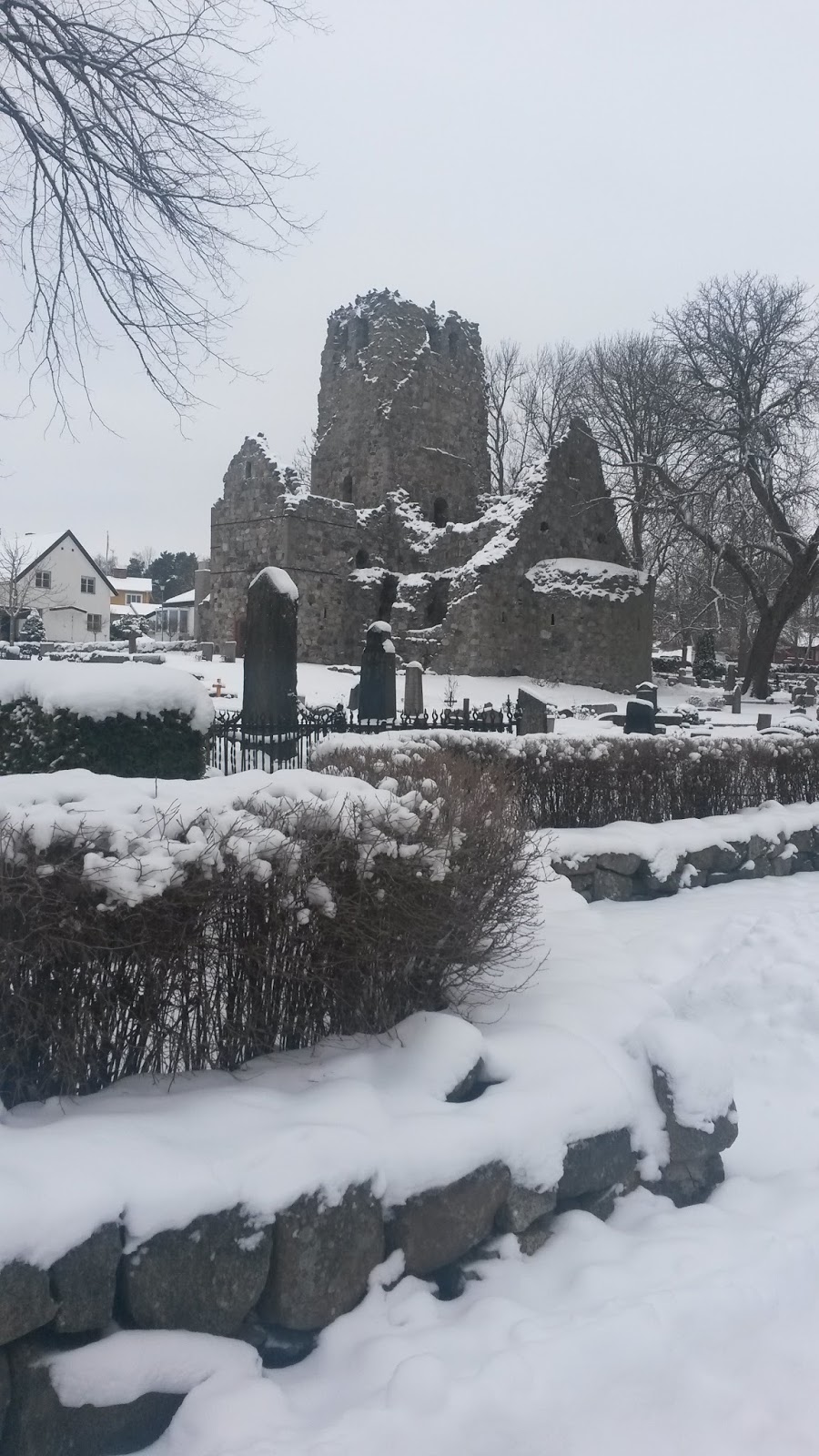
| St Olof's church ruin, Sigtuna, Uppland |
In my entry about the Stone Age I talked about how European encounters with other social groups through the Western colonialization of the last few centuries pretty much created the whole time period. Analogies was used to the contemporary "hunter-gatherer" societies to show that they belonged to a stage of development the European countries had left behind a long time ago. Just like the Stone Age was created based on a focus of difference, so was the Nation state created through focusing of what it was not.
![]() |
| Rune stone U161, Risbyle Uppland |
However, this perspective was very excluding. It excluded certain groups of people (in Sweden for example the Samis) but also parts of the past that was not glorious at all. For example, the Age of the Swedish Empire (Stormaktstiden) during the 17th and the 18th centuries was portrayed as bellicose, heroic and not least masculine. One did not talk about the rather catastrophic results of those war and values: Sweden itself was about to destruct due to the wars and a lot of people, both in Sweden and abroad, suffered greatly because of them. (Sweden would totally have been destroyed if it had not been for the women, but that is a story for another time.)
This is not so much a thing of the past either. We still tend to view our history through "romantic nationalistic glasses". To take the example of the Age of the Swedish Empire again, the Swedish newspaper Expressen as late as last year had a magazine about Sweden's "bloody history" in which one could read:
"Karl XII ärvde en stormakt från pappa Karl XI och de andra lyckosamma regenterna från 1600-talets krigiska epok." (Karl XII inherited a super power from his father Karl XI and the other successful rulers of the bellicose epoch of the 17th century.)I didn't really know what to think about this quote and the fact that they this summer had a similar magazine devoted to the Swedish war kings made me realise even more how important investments in public outreach really is.
![]() |
| Microlithic flint blade, dated to the Mesolithic that I found at Kanaljorden, Motala, Östergötland in 2013 |
There is another example, which might sound even more strange and I realised just how strange it is that we emphasize it because I went to a show by the American ventriloquist Jeff Dunham in Copenhagen a couple of years ago.
He came directly from Stockholm where he had visited one of the major tourist attraction of the Swedish capital and by far the most visited museum of the country: the Vasa museum.
![]() |
| The DC-3, Flygvapenmuseum, Linköping |
Why do we need a cultural heritage then? Well, I think mostly because it seems like a basic instinct inside of us all to seek our history, but also to be able to orientate ourself in time as well as in place wherever we are really. The important thing is that it needs to be including. We need to focus more on what makes our own cultural heritage similar to anyone else's than differences.
Last, but not least I want to show you a photo I found on Tumblr called “Globalization is beautiful sometimes”. It was taken in the Stockholm underground by Ninni Andersson in 2015.
PS. Om Ninni Andersson eller någon av flickorna på bilden ser detta: Det är en underbar bild! Jag hoppas det är okej att jag lånade den. Tack!
Etiketter:
Archaeology,
Contract Archaeology,
Cultural Heritage,
Cultures,
History,
Humanism
tisdag 6 september 2016
Johanne Hildebrandt - Sigrid, Sagan om Valhalla
Sigrid is the fourth book in Johanne Hildebrandt's Sagan om Valhalla series and the first one to take place in the Viking Age. The name of the main character to me is rather special since one of my two middle names is Sigrid. The book does not have anything to do with me though. The Sigrid it is supposed to portray is the "Swedish" queen Sigrid Storråda (Sigrid the Haughty according to Wikipedia) who first married the "Swedish" king Erik Segersäll (Erik Victorious), but who later divorced him and remarried Danish king Svend Tveskæg (Sweyn Forkbeard). The book is about Sigrid Tostesdotter who is forced to marry Erik, but falls in love with Svend instead. The connection to Freja is not entirely clear, but it is said that Sigrid is related to her and there is also talk about what happened to Saga and the geneaology in between the book about Saga (The post was updated 1 september 2016.) and the one about Sigrid.
At first I thought the topic for this book would be, the Christianisation of Scandinavia and/or the changing power structures which that entailed. It is my favourite research topic and I think I have something to say about it. However, as I thought more about the historical Sigrid Storråda I found a more interesting topic would be her power and her marriages. Actually I think you can find out a lot about her character (and also the role of the Viking woman) from how she handled her relationships. This sounds perhaps very much like "a woman is nothing without a man", but I do intend this to be something completly different.
In a time when marriages were much more a matter of politics (Especially in the higher end of the social ladder that Sigrid belonged to.) her choices of husbands do not seem so strange. I think the historical Sigrid was much more practical in this than Hildebrandt's Sigrid. For short I do not think she hated one (Erik) and loved the other (Svend). Instead I think she had a very strict view of both her power and the politics of Scandinavia during this time.
In a way this gives her a connection to what is probably one of the most famous female rulers throughout history: Cleopatra VII of Egypt. I am sure everyone have heard all about her love life, but because of my love for the British children's show Horrible Histories, I will leave a link to their Lady Gaga inspired song so they can tell you the short version:
Cleopatra also had two pretty famous relationships: Gaius Julius Caesar and Marcus Antonius (Mark Antony) for which she is actually most famous. It has been pretty easy to rally about Cleopatra and her relationships and lots of people (mostly men) have done so both in the past and in the present. However, I want to put her and Sigrid Storråda together and see if I can say something about them as people beyond their husbands by looking at their relationships to them.
We have already established that marriages for the Viking elite was more about politics than love and the same is true for Ptolemaic/Roman Egypt. Looking at Sigrid's and Cleopatra's relationships they actually both seem to have been pretty politically consious women. Establishing allies with the most powerful men in their world (Erik Segersäll and Svend Tveskæg respectively Caesar and Mark Antony) they seem to both had thought about what would give them most power. They also happened to establish this power by bearing everyone of these four men's children. This was probably the only means women in upper class families could gain influence and power (if their husbands didn't die). What I think is interesting too about this is the fact that Sigrid actually manages to get a divorce from Erik (The Norse written sources are not clear as to why, so I will leave it at that.) and manages to get some power status for herself while "between marriages" (so to speak). When she divorced Erik, she also took away all the new allies she had brought into the marriage.
In my last entry about chess I talked about how the change from vizir to queen in the European version of chess was an excellent way of showing the importance of women in Early Medieval Europe and Sigrid's story supports this. The women seem to have been very important in the political structures of the time and also free to move as they pleased. Sigrid's marriages to both Erik and Svend and her divorce from Erik show to me that she was a very politically consious woman and her children ended up on both the Swedish and Danish thrones at the time. I also think the Christian church's negative attitude towards divorces might have originated from this power that the women had in divorces.
The story of Cleopatra is far more tragic, but I do not think her society was as open to female power as the Viking one was. Her relationships to two of the most powerful political leaders show, just like Sigrid's that she had a political mind. It was not her fault that she ended up on the losing side.
Last but not least, the Scandinavian archaeological artefact I have chosen for this entry is a picture showing how beautifully decorated the Norwegian Oseberg ship is. The ship burial belongs to my favourites. It was found in Oseberg in Vestfold in Norway and excavated in 1904-05 by Norwegian Haakon Shetelig and Swedish Gabriel Gustafson. It was a burial of two women and included lots of precious artefacts. More information can be found here.
I read the hardcover verison of Sigrid, since that is the one I own myself (and it is really nice), but I think the papercover edition is so wonderfully beautiful, that I just had to include a picture of it. The picture was borrowed from here.
The Youtube clip is owned by CBBC.
The picture of the Oseberg ship was taken from Wikipedia.
At first I thought the topic for this book would be, the Christianisation of Scandinavia and/or the changing power structures which that entailed. It is my favourite research topic and I think I have something to say about it. However, as I thought more about the historical Sigrid Storråda I found a more interesting topic would be her power and her marriages. Actually I think you can find out a lot about her character (and also the role of the Viking woman) from how she handled her relationships. This sounds perhaps very much like "a woman is nothing without a man", but I do intend this to be something completly different.
In a time when marriages were much more a matter of politics (Especially in the higher end of the social ladder that Sigrid belonged to.) her choices of husbands do not seem so strange. I think the historical Sigrid was much more practical in this than Hildebrandt's Sigrid. For short I do not think she hated one (Erik) and loved the other (Svend). Instead I think she had a very strict view of both her power and the politics of Scandinavia during this time.
In a way this gives her a connection to what is probably one of the most famous female rulers throughout history: Cleopatra VII of Egypt. I am sure everyone have heard all about her love life, but because of my love for the British children's show Horrible Histories, I will leave a link to their Lady Gaga inspired song so they can tell you the short version:
Cleopatra also had two pretty famous relationships: Gaius Julius Caesar and Marcus Antonius (Mark Antony) for which she is actually most famous. It has been pretty easy to rally about Cleopatra and her relationships and lots of people (mostly men) have done so both in the past and in the present. However, I want to put her and Sigrid Storråda together and see if I can say something about them as people beyond their husbands by looking at their relationships to them.
We have already established that marriages for the Viking elite was more about politics than love and the same is true for Ptolemaic/Roman Egypt. Looking at Sigrid's and Cleopatra's relationships they actually both seem to have been pretty politically consious women. Establishing allies with the most powerful men in their world (Erik Segersäll and Svend Tveskæg respectively Caesar and Mark Antony) they seem to both had thought about what would give them most power. They also happened to establish this power by bearing everyone of these four men's children. This was probably the only means women in upper class families could gain influence and power (if their husbands didn't die). What I think is interesting too about this is the fact that Sigrid actually manages to get a divorce from Erik (The Norse written sources are not clear as to why, so I will leave it at that.) and manages to get some power status for herself while "between marriages" (so to speak). When she divorced Erik, she also took away all the new allies she had brought into the marriage.
In my last entry about chess I talked about how the change from vizir to queen in the European version of chess was an excellent way of showing the importance of women in Early Medieval Europe and Sigrid's story supports this. The women seem to have been very important in the political structures of the time and also free to move as they pleased. Sigrid's marriages to both Erik and Svend and her divorce from Erik show to me that she was a very politically consious woman and her children ended up on both the Swedish and Danish thrones at the time. I also think the Christian church's negative attitude towards divorces might have originated from this power that the women had in divorces.
![]() |
| Detail of the Oseberg ship |
Last but not least, the Scandinavian archaeological artefact I have chosen for this entry is a picture showing how beautifully decorated the Norwegian Oseberg ship is. The ship burial belongs to my favourites. It was found in Oseberg in Vestfold in Norway and excavated in 1904-05 by Norwegian Haakon Shetelig and Swedish Gabriel Gustafson. It was a burial of two women and included lots of precious artefacts. More information can be found here.
I read the hardcover verison of Sigrid, since that is the one I own myself (and it is really nice), but I think the papercover edition is so wonderfully beautiful, that I just had to include a picture of it. The picture was borrowed from here.
The Youtube clip is owned by CBBC.
The picture of the Oseberg ship was taken from Wikipedia.
Etiketter:
2014,
Ancient Egypt,
Cleopatra VII (69-30 BC),
Erik Segersäll (c 945-995),
History,
Johanne Hildebrandt,
Pharaohs,
Power,
Sagan om Valhalla,
Sigrid Storråda (967-1014),
Svend Tveskæg (c 960-1014),
SWE,
Vikings
lördag 3 september 2016
About chess - or the other inspiration for my view on culture
Not much is known
Of early days of chess
Beyond a fairly vague report
That fifteen hundred years ago
Two princes fought, though brothers
For a Hindu throne
~ Chess, Story of Chess
![]() |
| The Eddan Queen Photo: Historiska museet i Lund |
My grandfather taught me to play chess when I was five. Even though the blog post about the Eddan Queen is very imformative, there are some problems with it. For example it uses a direct translation to Swedish of the English names of the pieces and I will tell you why I find this problematic later on in this post, but first som back story.
Chess originated in India and is said to have been spread to Europe via the Arabs in the early Middle Ages. The oldest known written sources of the game and its rules is Versus de scachis dating to c. AD 1000. The blog post about the Eddan Queen says that it probably came to Scandinavia during the 12th century. However, as always with written sources, I think there are reasons to be cautious saying this dates the first use of the game in either Europe or Scandinavia. It might have been used for quite some time before that, just that no one had thought about writing it all down.
![]() |
| Part of the Lewis chess set. Photo: National Museums Scotland |
Like so often when different cultures interact and pick something up from one another, changes need to be made to accommodate the new social context. This also happened to the chess set. In the blog post about the Eddan Queen, it was explained that the army of the Indian and Arabic game turned into representations of the social classes in the European feudalistic society. I, myself, would actually not say that that was really the case.
The Medieval army of the European countries actually did consist of both kings, pawns, knights and bishops and sometimes even women (like queens). However, there were ceveral changes in the pieces collection anyway. The king kept his title, but his advisor, the vizier of the Indian/Arabic version turned into a queen. In Swedish she is normally known as Dam (direct translation: Lady). The battle elephant turned into a bishop in the English version of the game. In Sweden those same pieces are known as Löpare (direct translation: Runner) and the horses where never turned into knights as in the English version. The name normally used in the Swedish version is an older term for horse: Springare. In the Indian/Arabic chess, there were also two wagons that became castles in English and Torn (towers) in Swedish and also the foot soldiers turned into pawns (This is actually the only piece that can be directly translated in Swedish: Bönder.).
Why is this so important to me? Because chess is actually an excellent way to see how far Christianity had spread throughout Europe and which of the "classical social classes" of the Medieval period that had been established at the time the game was introduced.
![]() |
| More stilistic chess pieces |
The rules of the games also changed when it came to Europe, giving the new queen a much more active role in the games. Today she is the most valuable and piece.
But how about the Arabs? Did they find a need to change the game from its Indian roots? Yes, they did. The older, more naturalistic pieces contradicted the Quran's prohibition of portraying humans and animals. Because of this, the game pieces were transformed to more abstract versions. Today you can find them both while looking for chess sets.
![]() |
| King in a set of game pieces for Hnefatafl from burial BJ750, Hemlanden Birka, Björkö, Mälaren, Sweden Photo by SHM 2001-09-26 |
Pictures were borrowed from here, here and here and here.
Etiketter:
12th century,
Arabs,
Archaeology,
Board Games,
Chess,
Cultures,
History,
Hnefatafl,
India,
Middle Ages,
SWE,
UK,
Vikings,
Östergötland
torsdag 14 juli 2016
Conn Iggulden - Wars of the Roses. Stormbird
The Wars of the Roses is a difficult period in the history of England. Conn Iggulden starts his series about the period with the death of Edward III in 1377. After that event, there was a messy fight for power among his sons that split the family into many different branches. York and Lancaster are the most important ones to understand the Wars of the Roses.
The power struggle after Edward's death led to Henry IV (part of the Lancaster branch) took the throne from his cousin Richard II. Henry was the father of Philippa who married the Nordic union king Erik of Pomerania in 1406 (I will return to her in later blog posts.). His oldest son Henry V inherited the English throne after him.
Henry V is seen as a hero by the English for beating the French in the battle of Agincourt in 1415. He, however, died young in 1422 leaving the throne to his very young son Henry VI. The latter is the king of England when Stormbird starts off in 1443.
Henry VI is nothing like his father. He is young and sickly and wants peace. His spymaster Derry Brewer therefore gets the idea to marry him off to the French princess Margaret of Anjou in exchange for a truce and parts of France that had been counquered by the English during the 100 years war that Edward III started. This because he understands that Henry never will be able to keep them. Derry is one of a few fictional characters in Stormbird and Iggulden explains why he chose to follow this part at the end of the book in an appendix called Historical notes (The main reason he gives is that Henry would have needed a person who knew the ways of the French court.)
Henry and Margaret marries and a fragile truce is initiated. The Frenchmen are, however pretty violent in their ways to take back controll over the parts Henry has returned to them and they meets some serious resistance in the English settlers (eg Thomas Woodchurch and his son Rowan). Henry's father's second cousin (if I have correctly understood the family tree), Richard, Duke of York gets upset over the whole affair and starts gathering support for claiming his right to the throne.
Henry is depicted as a credulous and mild man who does not quite grasp the life outside of the castle walls. This leads to courtiers surrounding him, taking liberties and titles and his subjects suffer. This is where the character Jack Cade walks into the story. He is the leader of a revolt in Kent and manages to get to London. Iggulden depicts him as if he could be a very good leader, but his abuse of alcohol makes him volatile. If he had managed in making the Londoners part of his revolt, he might have succeded better, but instead, he loots the city, turning them against him.
Iggulden tells the story from many different characters. This gets confusing from time to time and I think it would have been better if he used one character's perspective for an entire chapter (kind of like in the A Song of Ice and Fire books). At the same time the story also benefits from this changing perspective, giving the reader a chance to see the different types of power that comes into conflict.
The character I personally likes most to follow is queen Margaret. She has got a bad reputation in history because of Yorkish propaganda and I like that Iggulden has chosen to get away from the picture of her as "The she-wolf of France". Instead he portrays her as a product of the power vaccum in England at the time. She develops from a 14 year old princess to a strong queen prepared to fight for her position, her marriage and her son. Unfortunately, she is the only female among the main characters in a very male oriented plot (Richard of York's wife Cecily do appear from time to time, but seems less important to the plot.). This might have historical reasons, but I still think there most have been some other women present at the time.
The portrayal of violence is pretty good, but I mostly enjoyed how Iggulden takes a more humanistic approach to the events of the time. The scenes between Margaret and Henry and between Thomas Woodchurch and Rowan is depicted with tenderness and love and is a nice interruption to the otherwise pretty raw power struggles the book depicts.
Etiketter:
15th century,
2013,
Conn Iggulden,
Henry VI of England (1421-1471),
History,
Middle Ages,
Philippa of England (1394-1430),
Stormbird,
UK,
Wars of the Roses,
Wars of the Roses series
tisdag 10 maj 2016
Historical Women: Kristina Nilsdotter Gyllenstierna
| Statue of Kristina at the castle in Stockholm |
Since 1397, all the Nordic countries of today (Denmark, Sweden, Norway, Finland and Iceland) were united in the so called Kalmar union (which I probably will have reason to come back to in future posts as well).
Queen Margareta was the founder, but really none of the Danish rulers were able to get total control over all of Sweden. The only one to succeed seems to have been queen Filippa. She died suddenly in 1430 and only a few years later Sweden (mostly the peasantry actually) rebelled against the Danes. This rebellion continued throughout the rest of the 15th and begining of the 16th century with Danish kings and Swedish regents taking turns ruling for shorter time periods.
Sten Sture (the younger) was regent of Sweden 1512-1520 and Kristina's husband. They married in 1511 and they got six children. Sten fought with the Swedish archbishop Gustav Trolle and was badly injured in a battle against the Danes at Bogesund in the province Västergötland (today the town is called Ulricehamn). Sten died on the way back to Stockholm.
As Sten Sture's widow, it was Kristina's job to overtake her husbands position as regent of Sweden and leader of the Swedish resistance. Many people from the high nobility turned against her, supporting the Danish king Kristian II instead, but she collected followers among the lower nobility and among the farmers. When the ice melted on the Baltic Sea Kristian arrived and besieged Stockholm. Kristina fought for about five months and probably also lost her youngest child, the son Gustav, who was only one years old during the siege. In september 1520, she was forced to give up. She, however, negotiated with the Danes and she and the people loyal to her and her husband got amnesty.
At first, Kristian seemed to keep his promice and invited everyone to his coronation in November that same year. Unfortunatelly, this turned out to be a trap. 82 men were beheaded (No women were executed, but it Kristina was close to becoming the only one.). Kristian also dug up Sten Sture's and his and Kristina's son's graves and burned their bodies together with the rest of the victims. This incident has been known as the blood bath of Stockholm. Kristina and the rest of the women involved, were spared and put in Danish prison while Kristian and his men continued to make more blood baths across both Sweden and Finland (the latter being a part of Sweden up until 1809).
The fight was not lost however and only a few years later (1523), Kristina's nephew Gustav was coronated king of Sweden. Once she was released from the Danish prison in 1524, Kristina, however, fought for her eldest son Nils's (who she had sent to Poland after her husband's death) right to the throne. Because of this, Gustav forced her to marry Johan Turesson of the noble family Tre Rosor. This meant she was not first and foremost Nils Sture's mother (and Sten Sture's widow) but her husbands wife. Even though Johan was forced to flee the country only two years after their wedding because of disloyalty against the king, she remained loyal to Gustav throughout the rest of her life. She died in 1559.
Etiketter:
16th century,
Historical Women,
History,
Kalmar union,
Kristina Nilsdotter Gyllenstierna,
Meet the Vasa Women,
Middle Ages,
SWE,
Vasa
Prenumerera på:
Inlägg (Atom)